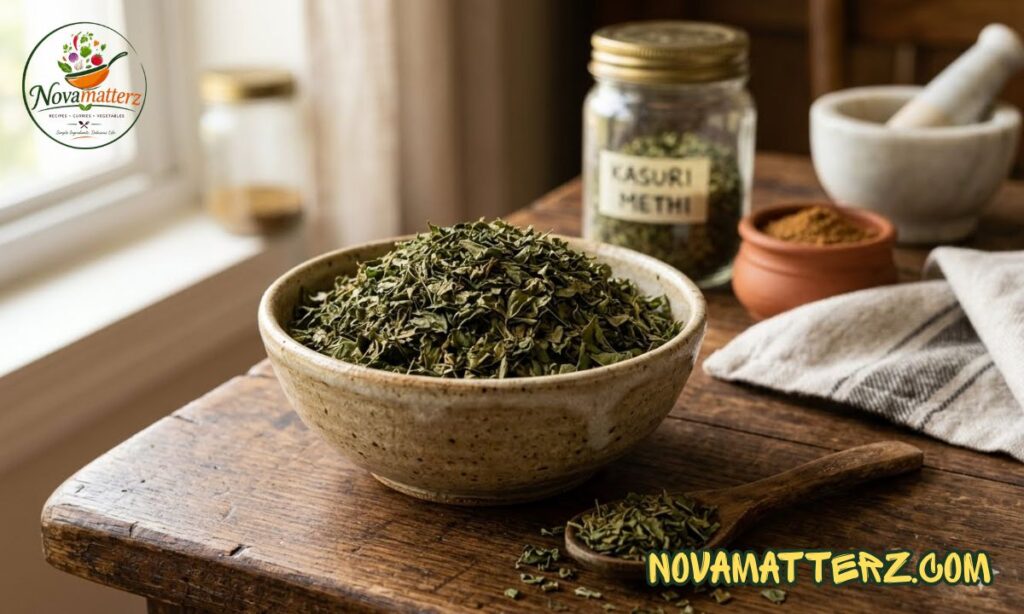
Kasuri Methi is one of the most essential ingredients in Indian cooking, especially in North Indian curries. Known for its strong aroma and slightly bitter taste, it adds a unique depth of flavor that instantly elevates simple dishes.
Made from dried fenugreek leaves, Kasuri methi is commonly used in dishes like butter chicken, paneer butter masala, and dal. In this guide, you will learn what Kasuri methi is, how it tastes, its substitutes, uses, and benefits, along with practical tips to use it correctly in your cooking.
What is Kasuri Methi?
Kasuri methi refers to dried leaves of the fenugreek plant. The name comes from the Kasur region, which is known for producing high-quality fenugreek leaves.
Fresh fenugreek leaves are harvested, cleaned, and then dried to preserve their flavor and aroma. Once dried, they become more concentrated in taste and are used in small quantities in cooking.
Kasuri methi is widely used in Indian, Pakistani, and Middle Eastern cuisines, mainly to enhance curries, gravies, and breads.
Kasuri Methi Flavour Profile
Kasuri methi has a distinctive flavor that is hard to replace. It is slightly bitter, earthy, and mildly sweet at the same time. The aroma is strong and instantly recognizable in dishes like restaurant-style curries.
Flavor Characteristics Table
| Property | Description |
| Taste | Slightly bitter with a hint of sweetness |
| Aroma | Strong, warm, and earthy |
| Texture | Dry and crumbly |
| Aftertaste | Lingering and rich |
When used correctly, it balances creamy and spicy dishes, making them taste more complete and flavorful.
Kasuri Methi Substitutes
If Kasuri methi is not available, there are a few alternatives you can use. However, none of them fully replicate its exact flavor.
Fresh fenugreek leaves can be used as the closest substitute, but they need to be cooked longer to reduce bitterness. Celery leaves and spinach can also be used in small amounts, though they provide only a mild similarity in taste.
Another option is to mix a small amount of mustard greens with herbs to mimic the slightly bitter profile. Still, Kasuri methi remains unique and is worth keeping in your kitchen.
Kasuri Methi Uses
Kasuri methi is mainly used as a finishing ingredient in cooking. It is usually crushed between the palms and added towards the end of cooking to release its aroma.
It is commonly added to creamy curries like butter chicken, paneer dishes, and dal makhani. It also works well in vegetable dishes, parathas, and even some snacks.
Common Uses Table
| Dish Type | How it is used |
| Curries | Added at the end for aroma |
| Breads | Mixed into dough |
| Vegetables | Used as seasoning |
| Snacks | Added for flavor twist |
Using it in small quantities is important because its flavor can become overpowering if used too much.
Kasuri Methi Benefits
Kasuri methi is not only flavorful but also offers several health benefits. It contains nutrients and compounds that support overall health.
It is known to aid digestion and help regulate blood sugar levels. It also contains antioxidants that support immunity. Additionally, fenugreek leaves are often linked to improved metabolism and better heart health.
Because it is used in small amounts, it acts more as a flavor enhancer than a primary nutritional ingredient, but it still adds value to your meals.
Kasuri Methi – To buy or to make?
Kasuri methi is easily available in stores, but some people prefer making it at home. Store-bought versions are convenient and have a long shelf life, making them a practical choice for regular use.
Homemade Kasuri methi, on the other hand, can be more aromatic if prepared correctly. Fresh fenugreek leaves are washed, dried completely, and then air-dried until crisp. Once dried, they are crushed and stored in an airtight container.
Comparison Table
| Option | Advantage | Limitation |
| Store-bought | Convenient and long shelf life | Slightly less fresh aroma |
| Homemade | Fresh and more aromatic | Time-consuming process |
For most home cooks, store-bought Kasuri methi is sufficient and reliable.
Kasuri Methi Powder
Kasuri methi powder is simply crushed dried fenugreek leaves. It is often used when a finer texture is needed in recipes.
To make it, the dried leaves are lightly crushed using hands or ground into a coarse powder. This form mixes easily into gravies and spice blends.
However, it is best to crush it fresh while cooking instead of storing it as powder for a long time, as it can lose its aroma quickly.
Conclusion
Kasuri methi is a small ingredient with a big impact. Its strong aroma and unique flavor make it an essential part of many Indian dishes. Whether you are preparing rich curries or simple vegetable dishes, adding a pinch of Kasuri methi can enhance the overall taste significantly.
Understanding how to use it correctly, along with its substitutes and benefits, helps you get the most out of this versatile ingredient. Keeping it in your kitchen ensures you can recreate authentic restaurant-style flavors at home.
Frequently Asked Questions
What is Kasuri methi made of?
It is made from dried fenugreek leaves.
When should I add Kasuri methi in cooking?
It is usually added at the end of cooking for maximum aroma.
Can I use fresh fenugreek instead?
Yes, but the flavor will be milder and less concentrated.
Is Kasuri methi healthy?
Yes, it contains nutrients and supports digestion and overall health.
How should I store Kasuri methi?
Store it in an airtight container in a cool, dry place.

Discover easy recipes, spicy curries, and fresh vegetable dishes by Riya on Novamatterz.com. Simple cooking for everyday delicious meals.